Monday, 1 November 2021

Publication Day!


Apologies for the crap graphic there - a very obvious sign of why my talents lay in writing rather than in anything visual! Stuart Manning and Andrew Orton who created the wonderful cover for The Long Game will be rolling their eyes if they see it, no doubt.

But I wanted to show off some of the lovely comments I have so far received from readers of the book. Because, frankly, who wouldn't?

Today is officially publication day for The Long Game. But thanks to the hard work and efficiency of publishers Ten Acre, most people who pre-ordered a copy of the first printing will probably have already received it over the course of the past week. Hence the very nice comments coming in, via Twitter and the Gallifrey Base message board, where this whole thing really started with me posting a timeline of this era for fun a few years ago.

The first printing has now completely sold out, but don't worry - the second will be ready very soon, and can of course be ordered via the Ten Acre website. 

Speaking of which, I ought to remind anyone reading this who doesn't yet have a copy that the book is only available online directly from Ten Acre. I mention this as during this week it cropped up on various top wishlists on Amazon, including in the top 20 for the "Most Wished For in Television". Which is very pleasing, of course, but ultimately rather pointless as you can't buy it on Amazon!

The book has certainly come a very long way this year. The manuscript was pretty much finished by the start of the year, but I could never have imagined that it would actually be out there in the world and being read and enjoyed by people before the end of it!

Here's the finished article alongside the print-out I had done back in the spring to use for checking for typing errors and any other assorted mistakes. Yes, the title did change - but for the better, I think. Although a little part of me will always think of it under the Resurrection name, as that's the working title it had for so long, and my folder with all the research, drafts, interviews and so forth in it still has that name!

On a publicity note, I have been continuing what I am now rather pleasingly but stupidly referring to as my "Podcast Book Tour"! I recorded an interview with another Doctor Who podcast on Friday evening, which should be out very soon. And then yesterday, Paul Kerensa released the latest episode of his excellent British Broadcasting Century podcast, which charts the earliest days of British broadcasting and the BBC. 

Obviously my book concerns a somewhat later era, but Paul often intersperses the historical elements of the podcast with guests discussing other bits of broadcasting history, and I was fortunate enough to be invited to come on and talk about The Long Game. In any case, I highly recommend the series to anybody with an interest in the history of the BBC. You can find the latest episode with my guest appearance here:


If anyone reading this happens to have their own podcast about either Doctor Who in particular or British television history in general and would like to have me on to talk about The Long Game, I'm very happy to consider any and all requests! Do please drop me a line.

Finally, I mentioned in the previous entry how much I was enjoying seeing people tweet photos of the book after they'd received their orders, and very pleasingly such pictures have continued to be posted throughout the week! There are a quite a few of them now, which is very nice. It's great to see something I only ever really wrote because I wanted to read it now being out there in the world and enjoyed by other people!


Monday, 25 October 2021

"Congratulations, it's a book!"


The Long Game exists! It's real, and it's out there in the world! The official release date isn't for another week yet, but Ten Acre have started sending out the pre-orders and some people have received their copies today - including me! Complete with a note from Stuart at Ten Acre telling me "Congratulations, it's a book!"

In fact, the entire first print run has now sold out ahead of the release date - although Ten Acre are already reprinting, so please do still order if you were thinking about doing so! This was probably helped by the Radio Times kindly publishing a piece about the book on their website on Saturday, using some preview quotes which we had arranged to give them. In fact, it was briefly the lead story on the site's main front page:


The Radio Times story also ended up being picked up by a few other sites, Yahoo News, the Metro newspaper and Digital Spy. Not quite in the same league as Morecambe-and-Wise-versus-Monty-Python back in August, but all good publicity for the book nonetheless!


I've also been doing some more personal publicity for the book with another podcast interview. This one was for the Something Who podcast and came out last week - it was great fun chatting not just about the book but about the story of my own personal fandom of the show, too. You can find that here:


But probably the most pleasing thing this week has been today, seeing tweets from people who have received their copies of the book and are either excited about starting to read it or have already started and have said very nice things:

It's hugely flattering to know that people are as interested in reading this as I was in writing it. And a relief too, of course! I'm incredibly pleased with how it's been received so far. And that I have a real, live book out there in the world again, after ten years since the Treasure Quest book!

If you would like to buy a copy of The Long Game, you can order one from Ten Acre's website by clicking here.

Monday, 11 October 2021

Party Like It's 1983!

Some more Doctor Who writing news, and thanks again to the good people at Doctor Who Magazine for running another of my pieces. In fact, this one was especially flattering as they actually asked me to write it rather than me pitching it.

The magazine has recently started a new range of special editions, each taking a detailed look at a particular year in Doctor Who's history. The third and latest of these specials, out now, looks at 1983, for which I was asked to write a piece about the legendary 20th anniversary convention held by the BBC at Longleat House.

It was good fun to put together, especially gathering people's memories of the event. I hope you enjoy it if you're picking up a copy of the special, which came out a couple of weeks ago.

On another note, some publicity for the forthcoming release of The Long Game! Thanks to some of my interviewees kindly giving their permission for some audio clips of my chats with them to be used, we have put together a little trail for the book, which you can see here:


In addition, as a further little tease we have also released the contents page!


And I have been doing some podcast interviews about the book, too. One of these was released over the weekend, with an Australian podcast called The Doctor Who Show. Many thanks to them for having me on - the interview with Rob hopefully gives more of an idea for those who are curious about what the book is about, why I wrote it and who I spoke to for it, without giving too much away and spoiling it for anybody. It was good fun chatting to Rob, and you can take a listen here:


The Long Game is released by Ten Acre Films on November 1, and you can pre-order a copy via their website.

Monday, 27 September 2021

Some big, exciting news!


I have a book coming out!

Not a novel - but nonetheless, something I have worked very long and very hard on, and of which I am very proud. In the unlikely event that you read these blog entries closely and memorise the content, you may possibly recall that I have mentioned once or twice before a non-fiction Doctor Who project on which I've been working.

Well, this is it! It's called The Long Game, and is due to be released by Ten Acre on November 1st. You can see the wonderful cover above, designed by my publisher Stuart Manning and with the model kit illustration created by Andrew Orton.

It tells the story of Doctor Who between the failure of the first attempt to revive it with the broadcast of the TV Movie in May 1996, to the point at which it was recommissioned as an ongoing series by the BBC in September 2003. Telling the stories of the other proposals and failed attempts along the way; how those responsible for bringing it back came to be in those positions; and perhaps most importantly of all, providing the background and context of the changes that took place in the BBC over those years which eventually provided the environment which allowed for this to happen. The sort of thing that in Doctor Who sources is usually dealt with in a few pages, or which in non-Doctor Who histories doesn't touch on the series at all.

It's a process which has long fascinated me, and did so at the time. I remember not long after the series was commissioned, trying to piece together from the existing interviews and reports and sources the chain of events which had let to it happening. The years went by, more sources became available as it all started to become history, and in 2015 - purely for my own interest - I put together a timeline of the events from 1996 to 2003, using various books, articles, interviews, documentaries and assorted bits and pieces.

I put this online and got some very nice comments from people about it, and it made me wonder if there might be a book in it. It was a book which I very much wanted to read, but which didn't seem to exist - pulling together all the different strands into one narrative. So I decided to have a go at writing it myself.

Over the autumn and winter of 2015-16, I put together a first draft, but although I enjoyed writing it and I felt it was pretty decent, the main problem I had was that I just wasn't able to get hold of most of the interviewees to whom I wanted to speak about that time. It was almost all put together from secondary sources, and it was far too short - only about 55,000 words. I always meant to go back and have another go someday, but for a few years never got around to it.

Then last year, after the first lockdown started, I found myself with more free time than I had done in the recent past - like so many people did, of course. So I decided to give it another go. 

This time, it went far better than I could ever have hoped. Now, I'm not modest to a fault. I know I'm not completely hopeless at this stuff - I can write pretty decently. At this stage I had a track record of not just doing a fair few bits for Doctor Who Magazine, but also making many radio documentaries for the BBC. I'm good at this sort of broadcasting history research, and making it understandable and relatable to a wider audience.

But nonetheless, I was rather bowled over by how so many people who didn't know me at all were willing to speak to me, and to help with arranging interviews. I was able to talk to the likes of Lorraine Heggessey, Alan Yentob, Mal Young, Julie Gardner, Jane Tranter... Huge, important names in the history of not just Doctor Who but in the history of British television, and they were all happy to speak in-depth about those years and the process which led to the show's recommissioning.

In all I was able to conduct over thirty interviews, and along with a great deal of research in other sources it's ended up being a book which I think tells that story usually skipped over in a few pages in a new, detailed and cohesive way which I don't believe has ever been done before. We announced the book on Saturday, and it's been wonderful to see such a positive response to it - as I had suspected, there are indeed a great many Doctor Who fans who, like me, are interested in this whole process and how it all happened.

If that's you, then the book can be pre-ordered from the Ten Acre website by clicking here. I very much hope that you enjoy it, and I can't wait for you to read it!


Tuesday, 7 September 2021

Into the Nexus

There has been a lot going on. And oddly, it all goes back to my university days.

I say "oddly" because I am not someone who has a particular nostalgia for my time at university. Don't get me wrong, it was perfectly fine and nice, but I didn't find it to be the profound or formative experience that others do. Although it was very important to my life in that without it I would never have come to Norwich, and would never have ended up working for the BBC. So it had a significance I could never have guessed at the time.

I attended the University of East Anglia from 2002 until 2005, and while I was there I was a member of the student TV station, Nexus. I was even president of it in my final year, a disastrous turn of events which proved to me that I should never be in charge of anything, ever. Still, at least that was a lesson in itself, I suppose...

Anyway, the station was sadly in its dying days at the time. But it was clear that it had a long and interesting history, which I was fascinated by. We had all sorts of relics in the form of old photos and reels of tape hanging around in the studio / office; reminders of more glorious days past.

I explored this a bit at the time, but only really out of a casual personal interest. However, a couple of years ago, I wondered whether it might be possible to make a radio documentary about Nexus for the station. Telling its story. In fact, I even pondered the idea "aloud", as it were, in a comment on a YouTube upload of a 1970s Nexus programme...

In April this year I decided to finally try and do something about it, and asked one of my bosses if I could give it a go. He said yes, so I set about trying to get permission to use clips from Nexus archive material - there'd be no point in doing it if I couldn't do that. This done, I then spent most of the summer putting the programme together, tracking down interviewees, recording chats with them and sorting through bits of archive. The resulting programme went out on Bank Holiday Monday, the 30th of August, as Nexus: Norfolk's Forgotten TV Station, and seemed to go down very well. I was able to speak to all sorts of interesting people, and I think I managed to do a decent job of making the Nexus story accessible and interesting to people who had no connection at all to the station or the UEA.

But that's really only half the story...

The weekend before it went out, the Eastern Daily Press once again kindly published a piece I wrote about the station to preview the programme. They again made it the cover feature on their Weekend supplement, with a four-page feature inside which you can read online here.


That was a general overview of the station, but I also knew that there was one particular aspect to the story which might make a good 'hook' to help promote the documentary with, which I gave to my colleagues at BBC News Online for a separate piece which they put up on the Friday before the documentary aired.

I remember when I first joined Nexus in the autumn of 2002, one of the people running it at the time telling me very proudly about their "famous Morecambe and Wise interview", but they never actually tried to do anything with it. It just sat there on an ancient, unplayable old Sony reel-to-reel tape, onto which it had been copied from the 1973 original sometime in the mid-seventies.


When I was more involved in running Nexus in 2004, I arranged with Paul Vanezis at BBC Birmingham to send it there to see if he could get anything off it. He told me at the time that he'd tried it on two different machines, but couldn't get anything off it on either of them, so it seemed to sadly be junk.

Later that year, however, I was sorting through the Nexus VHS archive, and I came across a compilation tape which someone had put together in 1983 of some of the best bits from the old reel-to-reel tapes, when they still had the ability to play them. It was a sort of "best of" of the past decade of Nexus... and it opened with a two-minute clip from the 1973 Morecambe and Wise interview.

I remember this snapped on rewind at the time, and I had to open up the case to repair the tape - in fact, I think I remember having to completely unspool the whole thing and spool it back into a new case! Once it was playable again I took a duplicate copy which I kept, purely out of interest in the station's history.

Fast-forward 17 years, and this summer I managed to digitise my copy of the tape, and there were Eric and Ernie still present and correct at the start of it. Sharing their thoughts on Monty Python's Flying Circus...

For the programme, I was able to both get hold of the original interviewer, Colin Webb, and put in a ludicrously optimistic bid to get Sir Michael Palin's reaction to the video... who said yes! I knew of course this made it a great chance to promote the documentary, but I never imagined it would end up going as big as it did.

The online article, which I helped my colleague Zoe Applegate put together, went up on the Friday morning...

It gained over a million views that day, at one point reaching No. 2 in the "most read" charts on the site...


It got Monty Python trending on Twitter in the UK...

And it got picked up by almost all the newspapers the following day. The Times even interviewed me about it for their feature! It was madness!

Perhaps the most pleasing of all for me personally, however, was that I'd also made a national version of the radio piece and sent it to the Today programme on BBC Radio 4... Who liked it, and ran it on the Saturday morning. It's difficult to explain quite how proud this made me. I love working at Radio Norfolk, of course, but Radio 4 is... Well, it's the original BBC. It's the descendant of 2LO, through the Regional Programme and the Home Service. An unbroken line of nearly a century, and on that day, just for five minutes, it was made by me.


I was all over the bloody place! I did an interview for my colleagues at BBC Three Counties Radio after they'd spoken to Eric Morecambe's son Gary, who lives on their patch. My colleagues at CNS, the part of the BBC who provide national and shared material to BBC Local Radio, sent out a version of the piece on the Monday morning which about twenty-odd stations ran... 

It's so strange how what was the documentary I've so far made with perhaps the most niche subject matter ended up getting by far the most publicity of any programme I've ever made. I'm certainly glad I made and held onto that VHS tape all those years ago, anyway!

Life's rather good at the moment, writing-wise. I've also just been commissioned to do a paid article, which I'm working on this week, and there may soon be something even bigger to tell you all about... Sometimes, when I am writing to potential interviewees for an article or the like, I'll introduce myself as "a writer and broadcaster". Which sounds ridiculously grand, but at the moment, just for a while, I feel as if I'm actually living up to that billing.

Oh, and that 1970s open-reel tape which had the entire Morecambe and Wise interview on? It turns out that all the publicity around the surviving clip ended up revealing that the reel actually still exists, so an attempt may yet be made to try and get the full recording off it.

Thursday, 24 June 2021

Donald Wilson Said...


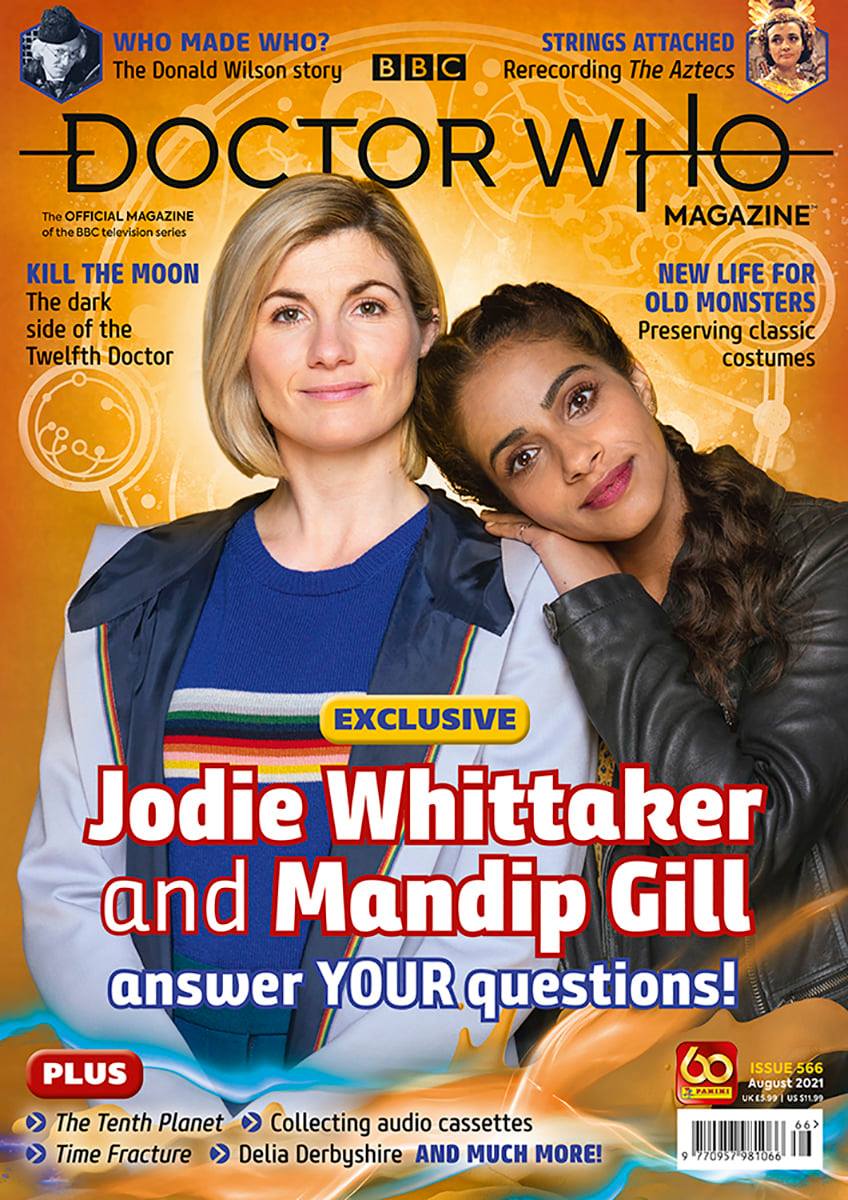
The latest issue of Doctor Who Magazine is out today, and for the first time in a while I've been fortunate enough to be able to write a piece for them. It's actually a piece I wrote an original, far-too-long version of a few years ago, but it's finally been able to find a home in the pages of the magazine, for which I'm very grateful.

It's all about a man named Donald Wilson, who has fascinated me for... I don't know, probably getting on for a quarter of a century now. He was the co-creator of Doctor Who, he may have even actually named the series, and yet he hardly ever seems to get his fair share of the credit. Which is particularly sad as he's also the one who seems to have most strongly believed in it, and who had the greatest foresight about its success, as most notably demonstrated in a memo he wrote to the editor of the Radio Times shortly before the first episode was broadcast:

Unlike Sydney Newman, not being widely credited as a creator of the show never really seems to have bothered Wilson, but it bothered me. I wanted to at least attempt to remind people of the important part he played.

During the course of researching the piece I was able to find a great deal of information about Wilson's life from speaking to his family, former colleagues, and through the BBC Written Archives Centre, the British Film Institute and various newspaper archives. There wasn't the time or space - haha - for much of this in the DWM piece, but perhaps I'll be able to use some of it elsewhere someday. I hope so - Donald certainly deserves his due.

You can read more about the vital part he played in creating Doctor Who in my piece in DWM issue 566, on sale now at WH Smith's, various other newsagents, and via DoctorWhoMagazine.com.

Thursday, 10 June 2021

At Last, The 1948 Article

A new professional article published today, for the BBC, and for a change not the part of the BBC for which I usually work! You can read it here.

A few weeks ago, the British Broadcasting Century happened to mention a certain Barrie Edgar, when talking about the BBC career of his father Percy. This rang a bell with me, as I wondered where I'd heard the name before. I was pretty sure it was as part of my Jimmy Jewell research back in 2019, and sure enough there it was - in the 1948 Olympic files. He was the co-commentator alongside Jewell on the football matches shown on TV during the games.


This then got me thinking that there were certain parallels between the 1948 Olympic football tournament and this summer's European Championships, which as I write this begin tomorrow. The 1948 event was also the first time an international football tournament was ever shown on television, and all-in-all I thought there might be an interesting article in it.

So I put something together and submitted it to BBC Archives for the blog associated with their Genome project, and very kindly they agreed to publish it. 

I've also had some good news this week about some other non-fiction irons in the fire, so all-in-all not a bad week on the writing front!